2024 -- 2025
Snyk EVO
From AI Threat Modeling to a security platform
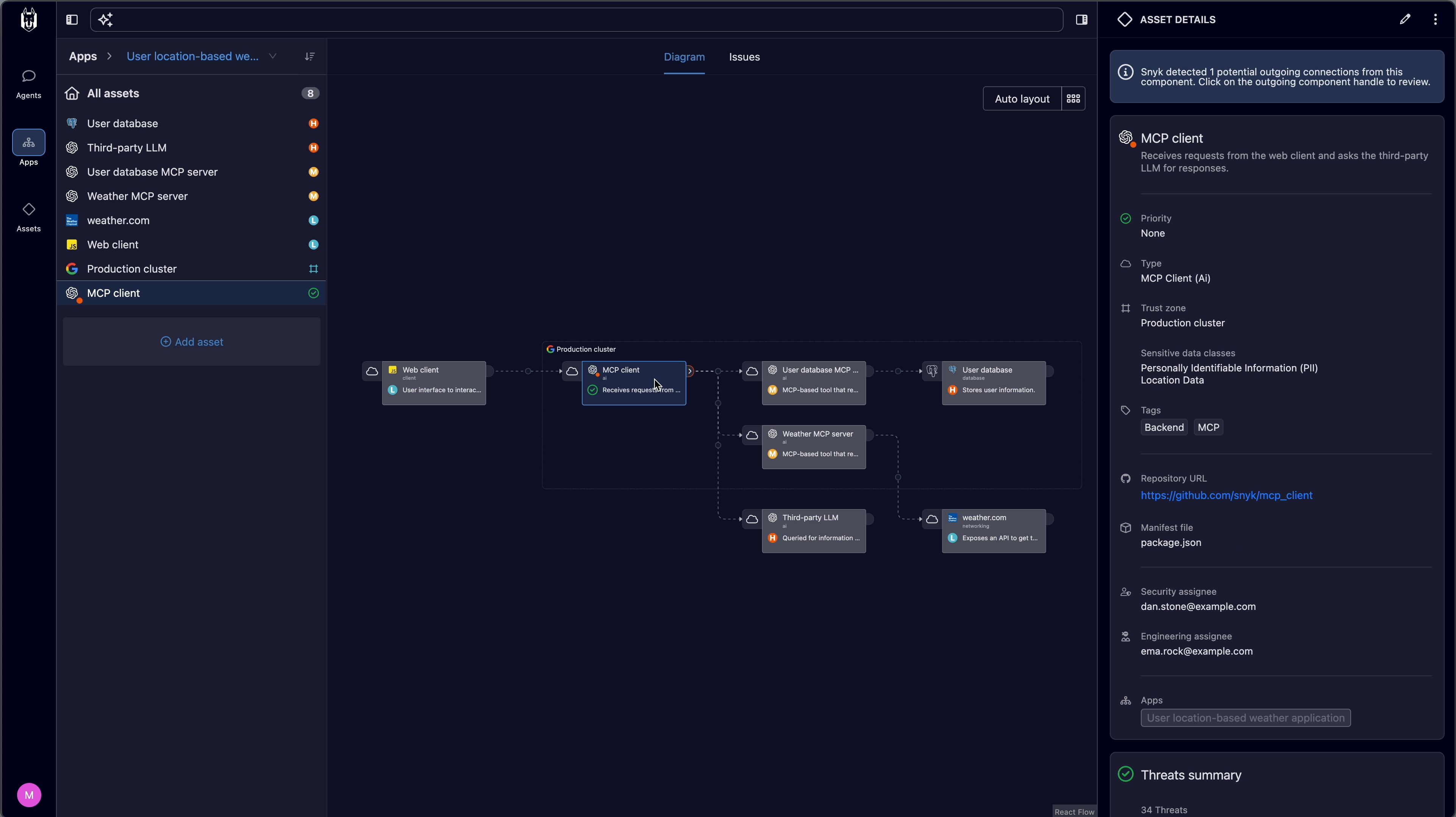
As the Lead Product Designer for Snyk's Incubation and Innovation division, I spearheaded the design of a "startup within the enterprise." This project details the journey of incubating a novel Threat Modeling product and its subsequent evolution into the foundation of Snyk EVO, the AI Security Platform.
The Vision: Bridging the Security-Developer Gap
Threat modeling has traditionally been a manual, communication-heavy process that digital tools struggled to streamline. Our goal was to leverage Snyk's unique position -- access to code repositories and a mission to unify security and development -- to create a "live" diagnostic tool.
Design Challenge Examples
The Persona dilema
We had two distinct personas we had to cater to. Research showed that if developers are willing to participate, DevSec security professionals are happy. We therefore prioritized developer requirements to ensure the tool felt like a help, not a hurdle.
Incorporating Live Data
Since we maintain a real-time connection to code, we had to design UX patterns to handle things like “drifts” -- showing how the current code model differs from the presented one, sometimes manually created models and diagrams.
Actionable AI Remediation
Traditional tools often output “noisy” and generic mitigations. We implement AI agents to deliver remediation instructions that are relevant, unique, clear, and concise. This required a flexible UI that leverages different components, such as code snippets, TODO lists, and explanations that developers can actually implement.
The Strategic Pivot: Building the Foundation for EVO
In 2025, Snyk recognized the need to move rapidly into the AI security domain. Because the Threat Modeling product was our most mature incubation -- boasting a modern tech stack and robust infrastructure -- it was selected as the foundational architecture for the entire Snyk EVO platform.
I led the design transformation, starting with an analysis and proposal for combining these separate products and features into a platform, and adapting foundational components (such as assets, policies, issues, and dashboards) to support a multi-product platform.
Impact
Launched in October 2025 to high internal excitement and immediate market traction, securing major customers and several million dollars in initial revenue.
Below, I gathered some screen recordings from different periods that can represent a few milestones. It also reflects my belief in prototyping, testing, and showing and feeling interactions live.
Early prototype
Figma walk-throughAn internal demo of an early threat modeling prototype used in discovery meetings to showcase key concepts. The design system and visual style are primarily based on our group’s previous product, which Snyk acquired (Helios).
Live prototype
React frontend, my voice :)At some point, the static Figma prototype became limited in showing major product concepts and testing interactions, usability, and real data. However, the engineering team was not yet staffed. To create progress in discovery, internally and with prospects, I developed this working front-end-only prototype (using the Helios UI infrastructure). In reality, it became a documentation tool for the product to come. Here I demoed to some internal audience. It includes concepts beyond UI: engine rules that will become customizable and the data model, because they require UX design attention.
Converting one product into a full platform
Figma walk-through, AI voiceAt this point, the incubation and innovation division was already formed, gathering several incubations, ideas, and a unifying concept. Here, I introduced how we can use the threat modeling infrastructure (which was the most advanced group) to build the AI security platform. A presentation I prepared for executives with a Lo-Fi prototype.
Early product
Snyk (React)This is an early implementation of the AI Security Platform. A noticeable change is the theme. Here, it is the first use of the new Snyk theme that the core design team is working on (not final). I adjusted it following their request to pilot it on a live product (user-selected dark and light themes).